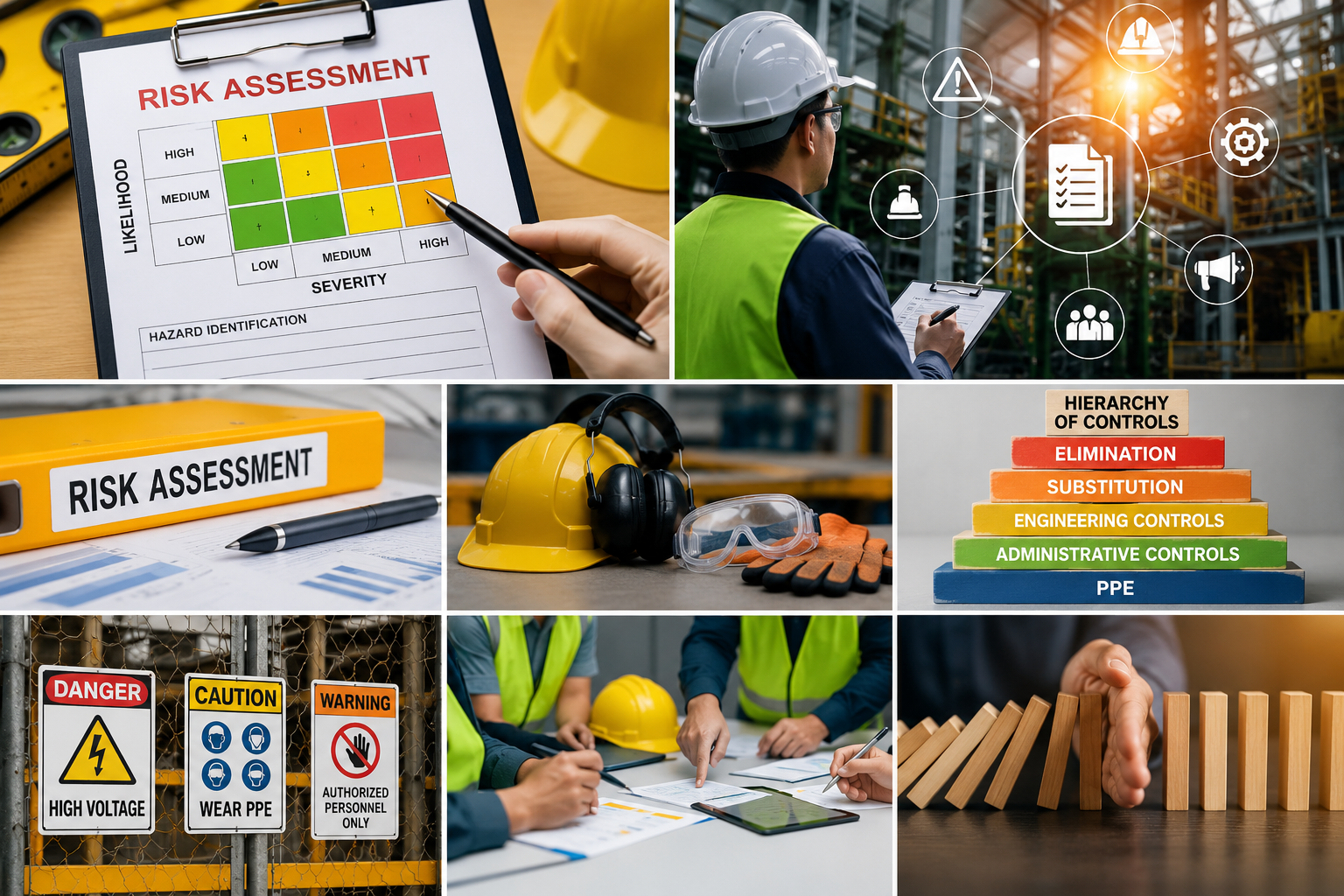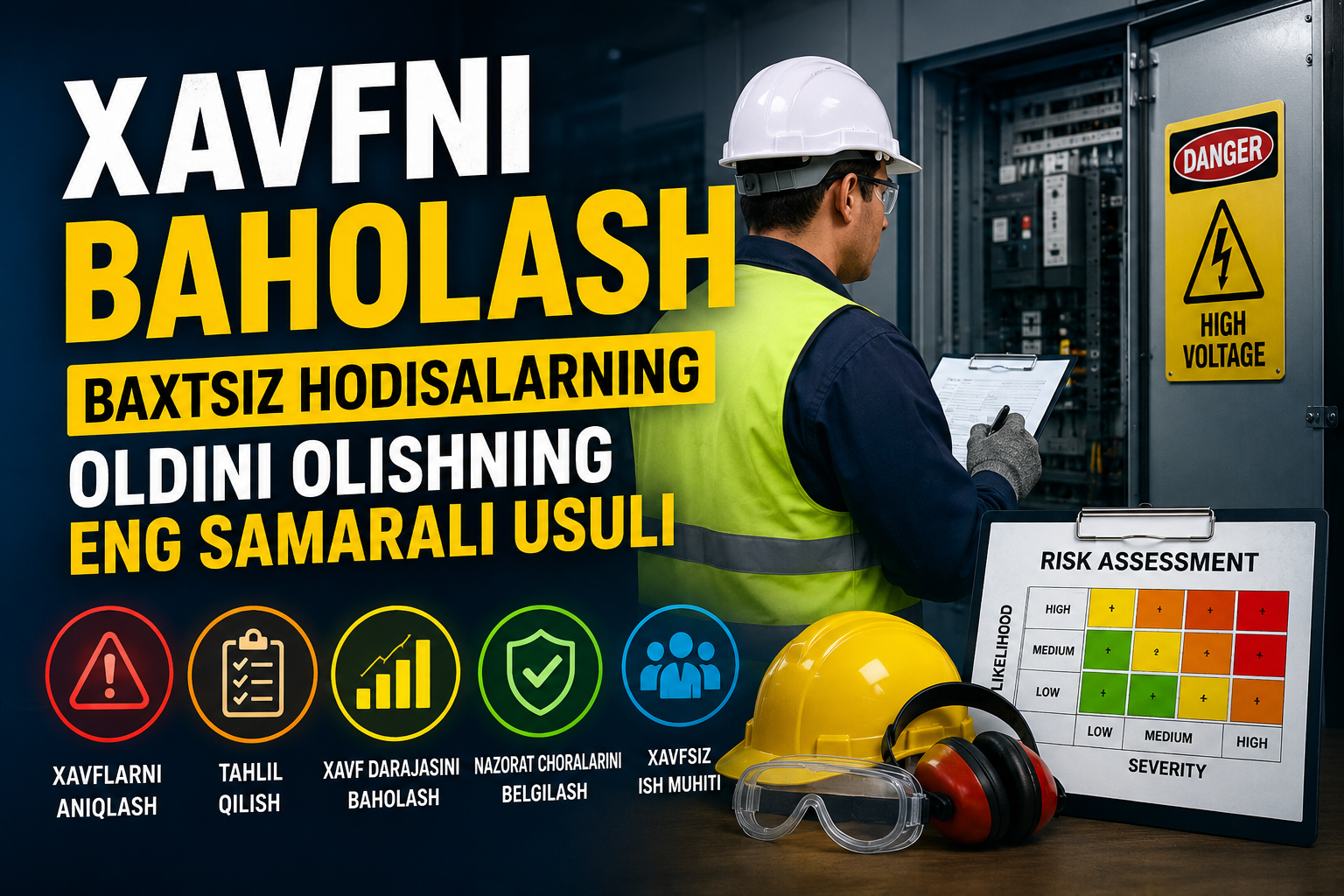
Большинство несчастных случаев на производстве происходит не из-за неисправности оборудования, а вследствие того, что опасности не были своевременно выявлены или оценены. Оценка рисков представляет собой систематический процесс выявления потенциальных опасностей, анализа вероятности их возникновения и тяжести последствий с последующим внедрением необходимых мер контроля.
Любые работы, связанные с электрооборудованием, работами на высоте, входом в замкнутые пространства, грузоподъемными операциями, огневыми работами или обращением с химическими веществами, должны начинаться с оценки рисков. Такой подход позволяет существенно снизить вероятность травм, аварий, повреждения оборудования и остановки производства.
Международная практика рекомендует использовать принцип «Иерархии мер контроля», согласно которому приоритет отдается устранению опасности, замене опасных процессов, инженерным решениям, административным мерам и только затем применению средств индивидуальной защиты. СИЗ являются последним уровнем защиты, а не основным способом предотвращения несчастных случаев.
Эффективная оценка рисков должна регулярно пересматриваться при изменении оборудования, технологий, условий труда или состава персонала. Такой подход повышает уровень промышленной безопасности, обеспечивает соответствие нормативным требованиям и сохраняет здоровье работников.
Связанные изображения